Home › Treatments › Minimally Invasive Surgery
Minimally Invasive Surgery in Ahmedabad
Where the tumour allows it, we remove oral cancer through the mouth itself — no external face incision — so the cancer comes out completely while your speech, your eating and your face are protected.
Medically reviewed by Dr Smit A. Desai — MDS (OMFS) · Fellowship in Oral Oncology (AOMSI) · Travelling Fellowship in Head & Neck Oncology (FHNO)
What is minimally invasive surgery?
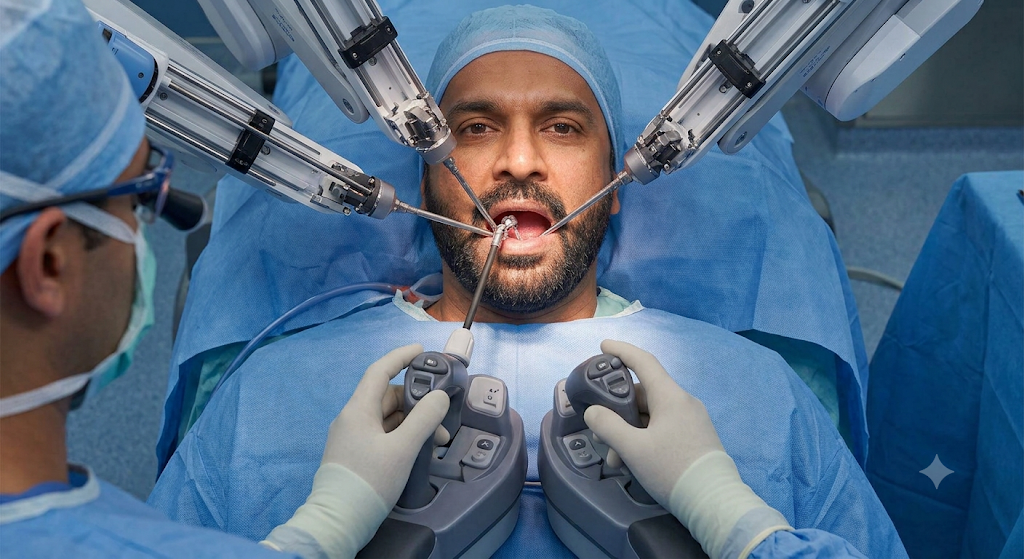
Minimally invasive surgery is cancer surgery performed through the smallest safe access — usually through the mouth itself, aided by an endoscope, an operating microscope or a laser — removing the tumour completely with clear margins while sparing healthy tissue, avoiding external face incisions, and protecting speech, swallowing and appearance wherever the disease allows.
“Minimally” describes the access, not the cancer operation. The tumour still comes out in one piece with a clear margin, and the neck is still assessed properly. Only the route changes — a small tongue or cheek cancer is reached through the open mouth instead of by splitting the lip and jaw.
Minimally invasive cancer surgery is not one fixed procedure but a family of techniques — transoral resection, endoscopic surgery, laser-assisted excision, microscope-assisted work. Choosing correctly is the whole skill. See the full pathway on our diagnosis and treatment of oral and neck cancers page.
What minimally invasive surgery protects — speech, eating and your face
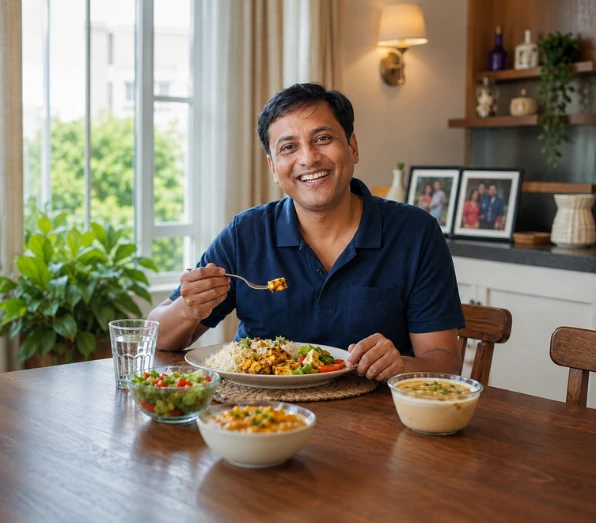
Patients rarely ask about incision length. They ask three things: Will I talk? Will I eat? Will I still look like myself?
- Your speech — a tongue tumour reached transorally disturbs muscle and nerve only where the cancer demands, so articulation recovers more easily.
- Your eating — sparing healthy mucosa and mouth opening protects chewing, and usually shortens time on liquids or a feeding tube.
- Your face — no lip-split, no external cheek incision, no visible facial scar.
- Your jaw — where bone is genuinely uninvolved it is left alone, not cut and plated.
- Your recovery — less trauma means less swelling and pain, a shorter admission and an earlier return to speaking and eating.
Where a defect does need rebuilding, it is rebuilt in the same sitting — see reconstructive surgery and oncoplastics.
Types of minimally invasive surgery we perform
Used alone or combined. Which suits you depends on where the tumour sits, how deep it goes and how wide your mouth opens.
Transoral (through-the-mouth) resection
The core of minimally invasive surgery for oral cancer — the tumour comes out through the open mouth (cheek, tongue, lip, gingiva, palate or floor of mouth) with a measured margin and no lip-split.
Endoscopic surgery / endoscope-assisted resection
An endoscope carries bright light and an angled, magnified view into corners the eye cannot reach. Minimally invasive endoscopic surgery defines the deep and posterior edge and confirms a clean resection bed..
Laser-assisted excision
Cuts and seals vessels in one pass, giving a dry, precise field for shallow lesions — see laser surgery for oral cancer below..
Operating-microscope microvascular reconstruction
Where a defect must be rebuilt, the microscope lets vessels roughly a millimetre wide be joined accurately, so transferred tissue survives and the mouth is restored in one operation.
Treatment of pre-cancerous patches
Leukoplakia and erythroplakia are removed transorally, and oral submucous fibrosis (OSMF) bands released to restore mouth opening — the earliest point at which oral disease can be treated.
Selective neck dissection
Said plainly: the neck is not treated through a keyhole. Nodes are cleared by conventional selective neck dissection through a standard neck crease incision — the technique with the longest record for reaching the right node levels while protecting nerves, vessels and shoulder function.
Not sure which applies to you?Send your reports and we will tell you honestly what is possible.
Laser surgery for oral cancer
Laser surgery for oral cancer uses a focused beam of light instead of a steel blade. The beam cuts and seals in one pass, which suits the shallow, bleeding-prone surfaces of the mouth. It is a tool inside the procedure, not a speciality.
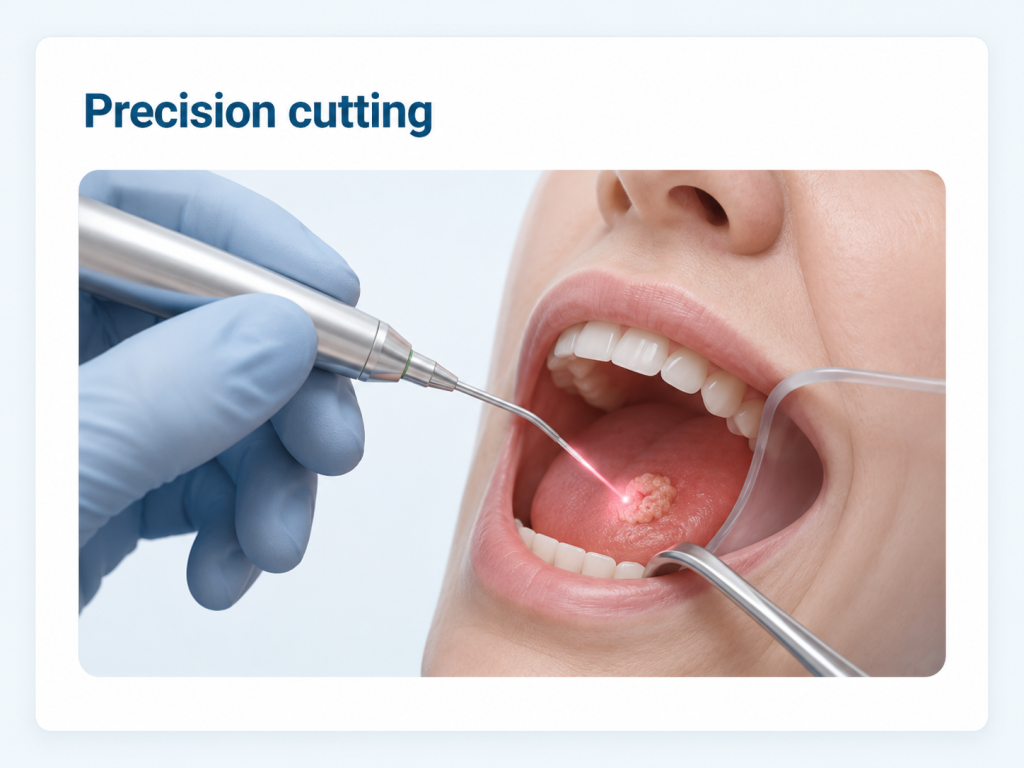
Precision cutting
The beam removes tissue in a controlled, shallow layer, so the surgeon follows the edge of a lesion closely.
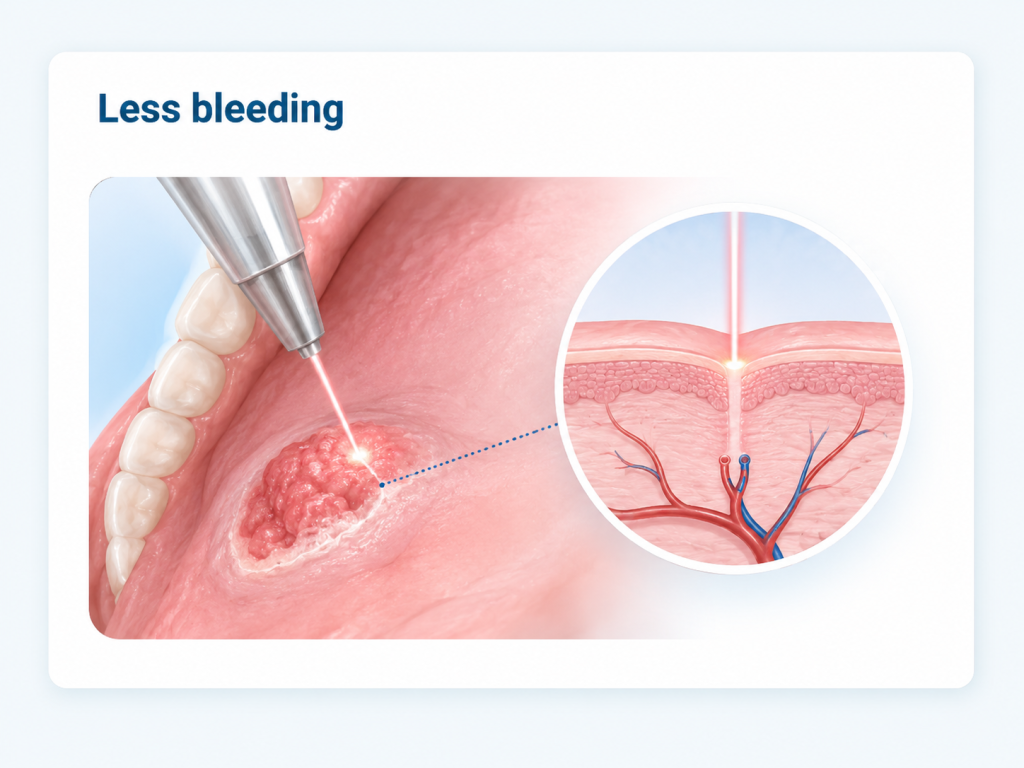
Less bleeding
Vessels are sealed as the beam passes. A drier field keeps the true edge of the lesion visible.
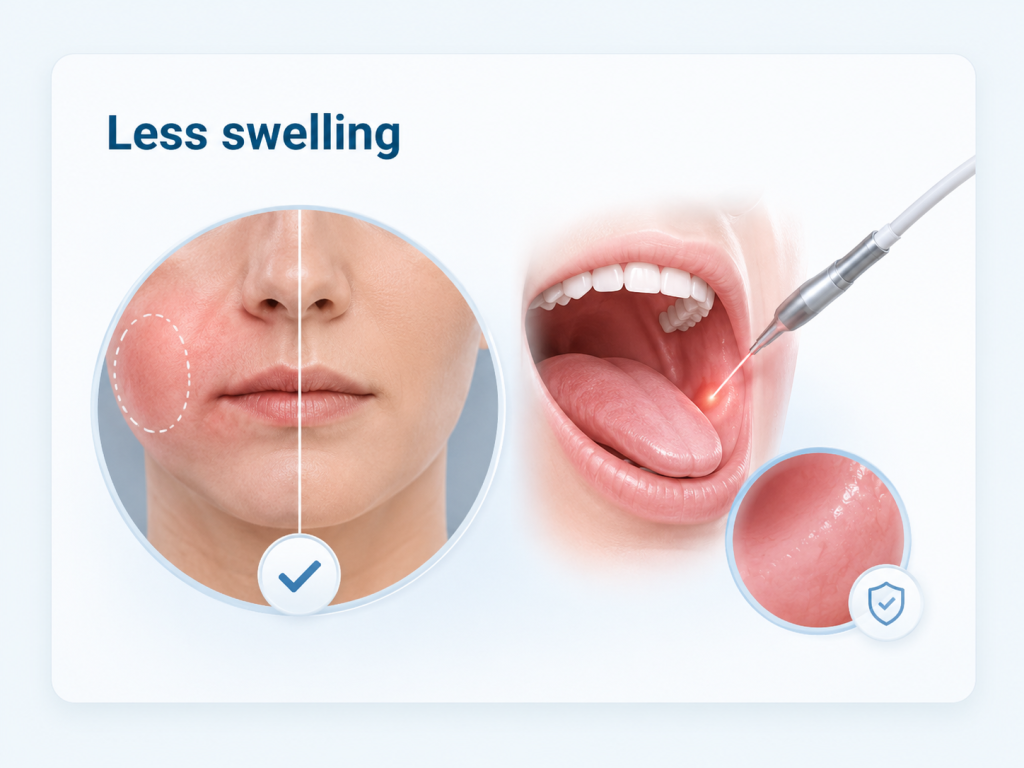
Less swelling
Lymphatic channels are sealed too, so cheek and tongue swelling is usually less than after conventional cutting.
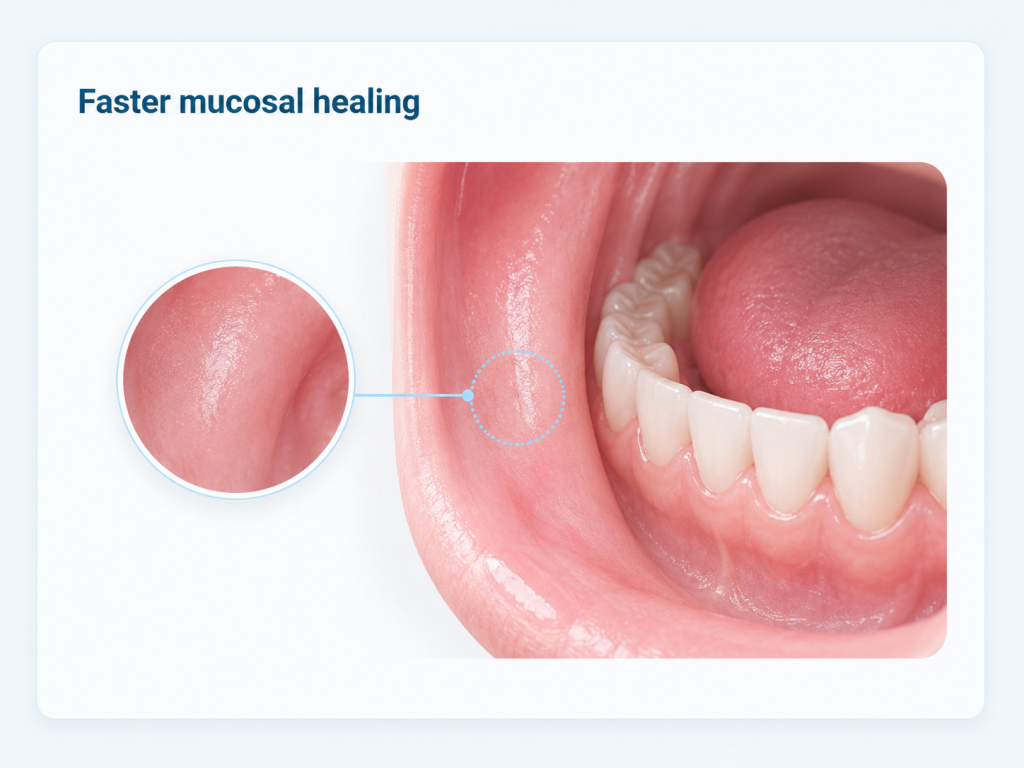
Faster mucosal healing
Shallow laser wounds are often left to heal without stitches, and oral mucosa heals fast.
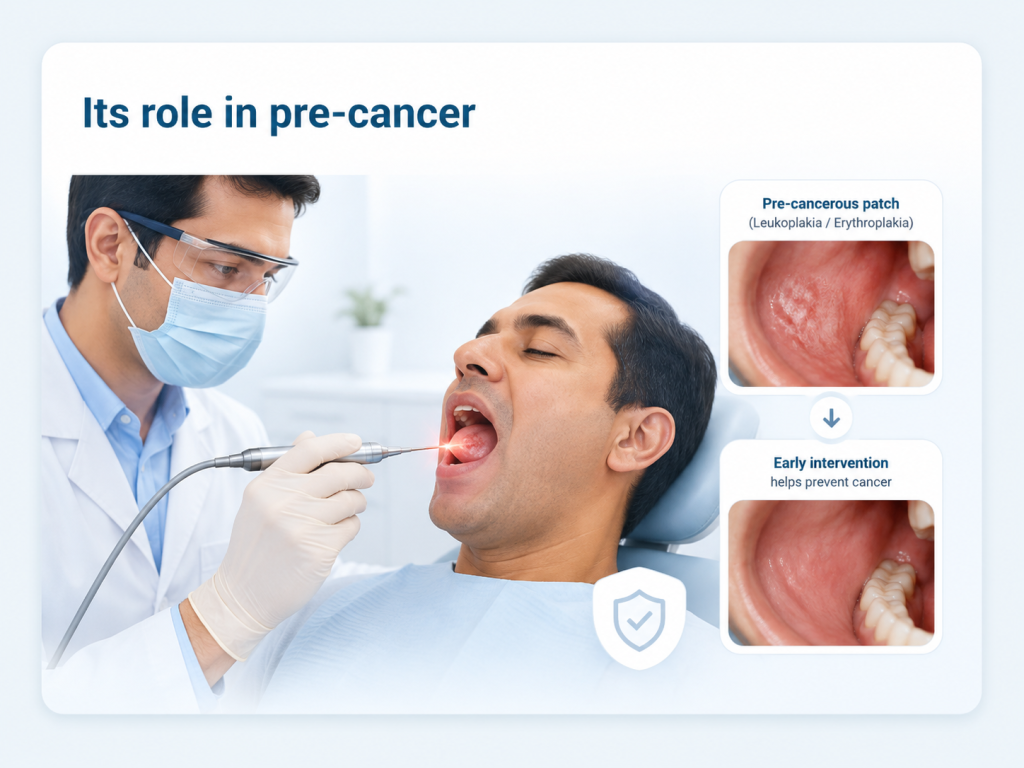
Its role in pre-cancer
Leukoplakia and erythroplakia can be removed as a day procedure, the specimen still going for histopathology.
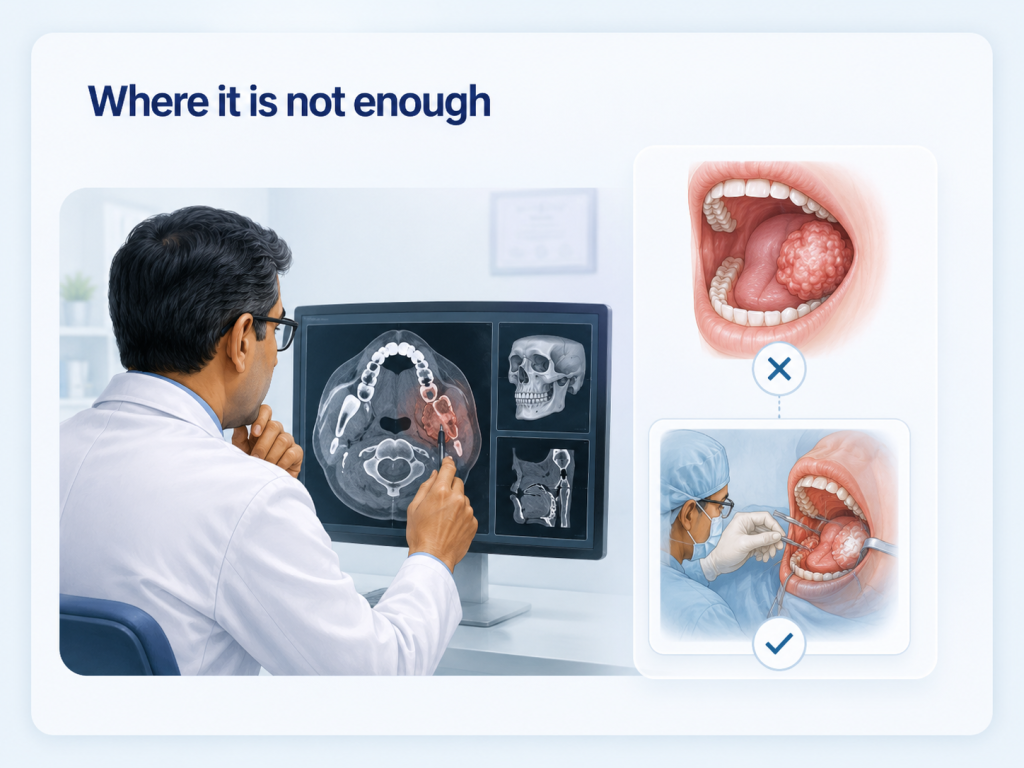
Where it is not enough
Deep, bulky or bone-involving tumours need conventional resection. Depth of clearance matters more than the instrument.
Minimally invasive surgery vs open surgery
Open surgery is not the old-fashioned option. For the right tumour it is the correct one — the only approach that reliably clears disease grown into bone, skin or deep muscle. Two tools, two jobs.
Where the two approaches actually differ.
Incision
Through the open mouth, endoscopic surgery for the deep edge. No lip-split or facial incision; a neck crease incision if nodes need treating.
Wide external exposure — lip-split, cheek flap or mandibulotomy — giving direct sight of the tumour.
Hospital stay
Generally shorter; many patients eat and mobilise quickly.
Longer — bigger operation, reconstruction, monitored flap recovery.
Speech & eating impact
Less disruption — untouched tongue muscle, nerves and mucosa keep working.
More initial disruption, then structured rehabilitation planned from the outset.
Reconstruction needed
Often none; small defects close directly or heal by themselves. Larger ones may need a flap.
Frequently yes, including microvascular free-flap reconstruction in the same sitting.
Recovery time
Faster — less swelling and pain, an earlier return to normal speech and diet.
Longer and staged, over weeks to months. The end result can still be excellent.
When it is chosen
Early, accessible tumours (broadly T1–T2); no bone, skin or deep-muscle involvement; adequate mouth opening.
Advanced or infiltrating tumours, bone or skin involvement, node-positive neck, restricted mouth opening, posterior or recurrent disease.
The question is not “which is more modern?” but “which removes this cancer completely?” — for advanced disease that is often the bigger operation, so see surgeries for advanced oral and neck cancer. Minimally invasive skull base surgery is not used here; an open skull base and craniofacial resection is planned instead.
Are you a candidate for minimally invasive surgery?
Suitability comes down to four things: tumour size, depth, node status, and whether the surgeon can reach it through your mouth — confirmed on imaging and, where useful, endoscopic surgery.
Likely suitable
- Early-stage oral cancer, broadly T1–T2
- A node-negative neck on examination and imaging
- An accessible site — tongue, buccal mucosa, floor of mouth, lip, gingiva or palate
- No involvement of bone, overlying skin or deep muscle
- Adequate mouth opening for instruments, an endoscope and a clear line of sight
- Pre-cancerous lesions — leukoplakia, erythroplakia and OSMF bands
Needs open surgery instead
- Advanced disease, broadly T3–T4
- Involvement of the jawbone, overlying skin or deep muscle
- A node-positive neck requiring comprehensive treatment
- Trismus preventing access — most often OSMF-related
- Defects that will need free-flap reconstruction to close
- Posterior tumours whose far edge cannot be safely reached transorally
- Recurrent disease in a previously operated or irradiated field
Our commitment to you: the cancer clearance always outranks the approach. If a complete removal requires converting to an open approach mid-operation, that is what will be done — and you will have been told beforehand, so it is never a surprise.
Recovery after minimally invasive surgery
A general shape, not a promise — every mouth heals at its own pace. This assumes an uncomplicated transoral, endoscopic surgery or laser-assisted excision; with a neck dissection or reconstruction, each stage takes longer.
The first few days
Swelling and soreness peak early, then settle. Pain is managed with regular medication. Cool liquids, a soft diet, careful rinsing. Speech sounds thick — that is swelling, not damage.
Weeks one to two
Swelling reduces and the wound surface covers over. Most people move to a soft diet, and speech clears day by day. Your histopathology report is discussed now; it decides whether further treatment is needed.
Weeks three to four
The mucosa is largely healed and normal activity resumes. Diet broadens, though very hot, spicy or sharp foods are best avoided. Speech or swallowing therapy does most of its work now.
Six weeks and beyond
Tissues have settled and comfort keeps improving for months. Surveillance follow-up begins, with support for speech, chewing and dental rehabilitation. Complete tobacco and areca-nut cessation matters more than anything else you can do yourself.
Want a timeline for your own case? Bring your reports and you will get a realistic one.
What affects the cost of minimally invasive surgery
Why we do not publish a fixed price: a published figure can only describe a case that may not resemble yours. So we publish the factors instead — the cost of minimally invasive surgery in india varies with all of these.
What the cost depends on
- Stage and extent — how much tissue must come out for a clear margin.
- Whether reconstruction is needed — a directly closed defect and a microvascular reconstruction are different operations.
- Theatre and anaesthesia time — longer procedures use more operating-room resource.
- ICU and ward days — monitoring required and length of admission.
- Imaging — the scans needed to stage the disease.
- Biopsy and frozen section — margin checks during surgery, confirming clearance before you leave the table.
- Histopathology — full examination of the specimen.
- Whether radiotherapy follows — treatment after surgery changes the overall cost of care.
Get a free written itemised estimate
Send or bring your biopsy report and scans. After the consultation you receive a written, itemised estimate covering surgery, stay, diagnostics and follow-up for your case.
- Free, written and itemised — line by line
- Given before you commit to anything
- Explained in person
- We help with insurance pre-authorisation
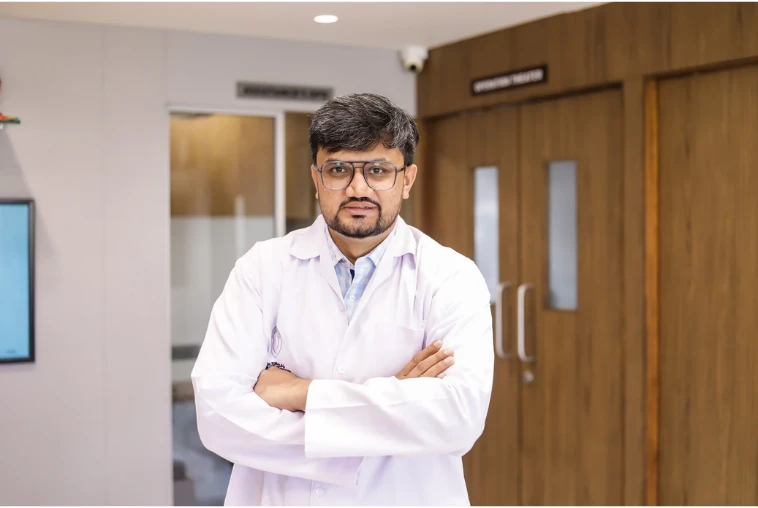
Meet your surgeon — Dr Smit A. Desai
Consultant Oral Cancer Surgeon · Heyansh Oral Cancer Hospital, Ahmedabad
His published work is on advanced buccal mucosa cancer involving the masticator space (T4b) and compartment resection — the far end of the difficulty scale, and the experience that makes the judgement about when a keyhole route is not safe a reliable one. More on our about us and head and neck cancer surgeon in Ahmedabad pages.
- BDS (2007–2012)
- MDS Oral & Maxillofacial Surgery (2013–2016), CDSRC Bopal
- Fellowship in Oral Oncology (2017–2019) — first batch of AOMSI
- Travelling Fellowship in Head & Neck Oncology, FHNO (April 2018)
- Junior Consultant, Head & Neck Oncology, Shankus Medicity, Mehsana
- Member — AOMSI · IAOO · IAOMS · FHNO
- Best poster, 6th World Congress 2017, IAOO Bangalore
- Speaker at 20+ national and international conferences
Why choose Heyansh Oral Cancer Hospital for minimally invasive surgery
Not adjectives — the checkable reasons patients across Gujarat choose this team for minimally invasive cancer surgery.

Two oncology fellowships
A Fellowship in Oral Oncology from the first AOMSI batch and a Travelling Fellowship in Head & Neck Oncology (FHNO), on top of an MDS — dedicated training in minimally invasive cancer surgery.

Volume that builds judgement
8,000+ patients treated and 50–70 surgeries every month over 10+ years. Judging which tumours suit minimally invasive endoscopic surgery is built on that volume.

An operating microscope in theatre
Available for microvascular reconstruction and fine tissue work, so a large defect is rebuilt in the same sitting.

Published in advanced disease
Published work on T4b buccal mucosa cancer and compartment resection — the surgeon who knows the limits is the one you want deciding if you are inside them.

4.9 from 261 Google reviews
Real patient journeys too — a seven-year survivor story and an oral cancer recovery at 80.

Three clinics across Ahmedabad
Consult at Maninagar, Satellite or Nikol / New Naroda — a dedicated oral cancer hospital in Ahmedabad, open round the clock.
Get an expert second opinion
Told you need an open operation, or that it is inoperable? Send your reports. Dr Smit reviews them personally and tells you what he would do — including when a keyhole approach would be the wrong answer.
Related: mouth cancer surgery · tongue cancer surgery
Book your consultation
Find out whether a keyhole approach is an option for you — and if not, what is.
Also 087349 54487 (Maninagar) · 098983 48601 (Nikol) · drsmitdesai111@gmail.com · Mon–Sat 10am–2pm & 5–8pm
Minimally invasive surgery — frequently asked questions
No — a robot is not used here, and we say so plainly. Its real value is in the oropharynx — tonsil and base of tongue — not the front of the mouth, where a tumour is directly accessible and a robot adds little.
Dr Smit’s own published work is on achieving results with conventional open instruments, without a laparoscope or robot. Where extra vision helps, minimally invasive endoscopic surgery provides it.
For a correctly selected tumour, yes. Same clear margin, same specimen for histopathology, same assessment of the neck — with endoscopic surgery verifying the deep edge. The risk is the wrong tumour, not the technique.
Usually far less than after a larger open operation — tissue that is never cut keeps working. Early swelling makes speech thick, then settles. The long-term result depends on how much tongue or floor-of-mouth tissue was removed, explained before you consent.
Not felt during the procedure — local or general anaesthesia is used depending on the lesion. Afterwards there is soreness like a mouth ulcer, settling over days with simple medication.
A laser is a cutting instrument, not a treatment in its own right — the surgery is what cures. For a small, shallow, early lesion with clear margins, laser surgery for oral cancer does what a scalpel would; deep, bulky or bone-involving disease needs more. Be wary of a laser sold as a shortcut.
Yes — one of the most worthwhile things we do. Leukoplakia and erythroplakia carry a real risk of turning malignant; they are removed transorally, often as a day procedure, and OSMF bands released. Tissue always goes for histopathology, and stopping tobacco and areca nut matters just as much.
After an uncomplicated transoral or laser-assisted excision, soreness and swelling settle over one to two weeks, a soft diet is usual by two weeks, and normal activity resumes at three to four weeks. Neck dissection or reconstruction takes longer — see the timeline above.
No — and this myth costs lives every year by delaying treatment. The tumour is removed whole, with a margin around it, as a single intact specimen. What truly allows cancer to spread is leaving it untreated.
No fixed price. It depends on stage and extent, reconstruction, theatre and anaesthesia time, ICU and ward days, imaging, biopsy and frozen section, histopathology, and whether radiotherapy follows. You get a free written itemised estimate after consultation, plus help with insurance pre-authorisation..
India carries one of the world’s highest burdens of oral cancer, so Indian head and neck units see these tumours in volumes specialists elsewhere rarely meet — and volume builds judgement. The same oncological standards apply here as anywhere, endoscopic surgery and laser techniques included. Background: the National Cancer Institute; more on our blog.
Minimally invasive surgery in Ahmedabad — Heyansh Oral Cancer Hospital
Three clinics across Ahmedabad · 4.9 from 261 Google reviews
Maninagar
305, Shreekar Avenue, Old Chawla Park Society, nr Bhairavnath BRTS, Gopal Chowk, Maninagar, Ahmedabad 380008
Satellite
Santorini Square, Abhishree Complex, 512, Satellite, Ahmedabad 380015
Mon–Sat 10am–2pm & 5–8pm · Sun closed
Nikol / New Naroda
Rosevill Sky A, A/33, Nikol–Naroda Rd, opp. Pushkar Icon, New Naroda, Nikol, Ahmedabad 382345
Mon–Sat 10am–2pm & 5–8pm · Sun closed
General information about minimally invasive surgery for oral cancer — not a substitute for consultation: contact us · media gallery.