- 29
- Sep
What Happens During an Oral Cancer Biopsy?
Published 27 Sep 2026 · Last reviewed 27 Sep 2026 · ~11 min read
Key takeaways
- A biopsy is the only test that can confirm oral cancer. Scans can suspect it; only tissue under a microscope proves it.
- The area is numbed with a local anaesthetic injection. You stay awake, and taking the sample takes 10 to 15 minutes.
- You should feel pressure, not pain — then soreness for two to three days. For some people that soreness is more than mild, and that is normal too.
- Stitches dissolve and the mouth heals in roughly one to two weeks.
- Results commonly take one to two weeks. A longer wait does not by itself indicate bad news.
- A biopsy does not spread cancer. Delaying one can delay diagnosis.
Jump to a section
- What happens during an oral cancer biopsy?
- Types of oral cancer biopsy
- Step by step: the appointment
- Does it hurt? An honest answer
- After the biopsy: eating and healing
- How long results take — and the wait
- Understanding your biopsy report
- Can a biopsy spread oral cancer?
- What does it cost in India?
- Who should do your biopsy
- FAQ
What happens during an oral cancer biopsy?
1. Numbing the area
A local anaesthetic is injected next to the patch or lump. It stings for a few seconds, then the area goes numb.
2. Taking the sample
A small piece of the abnormal tissue is removed — with a punch, a scalpel, a brush or a fine needle.
3. Closing and sending
The site is closed with a dissolving stitch or cautery, and the sample goes to the lab the same day.
Being sent for an oral cancer biopsy does not mean you have cancer. It is advised when something needs a definite answer: an ulcer lasting over three weeks, a white patch (leukoplakia) or red patch (erythroplakia), a firm lump in the mouth or neck, or a mouth stiffened by oral submucous fibrosis (OSMF) from gutka and areca nut. No scan can tell cancer cells from harmless ones. Read more about the signs and symptoms of oral cancer.
Types of oral cancer biopsy
| Type | What is done | Typically used when |
|---|---|---|
| Punch biopsy | A small circular blade, 3–5 mm across, cuts out a neat cylinder of tissue — like a tiny cookie cutter. | Flat patches on the cheek, tongue or lip. Quick and tidy, often with one stitch or none. |
| Incisional biopsy | A scalpel takes a wedge from the edge of the lesion, usually with a little normal tissue for comparison. | Larger lesions, and whenever the surgeon needs to see how deep it goes. The usual choice when cancer is suspected. |
| Excisional biopsy | The whole lesion is removed, with a small rim of normal tissue. | Small lesions that look likely to be harmless — diagnosis and treatment in one go. |
| Brush biopsy | A stiff brush is rotated over the surface to collect loose cells onto a slide. No cutting, no stitches. | Screening a suspicious area. An abnormal result still needs a tissue biopsy to confirm it. |
| Fine needle aspiration (FNAC) | A thin needle draws cells out of a lump, often with ultrasound guidance. | A swollen lymph node or lump in the neck, rather than the mouth lining. |
| Under general anaesthetic | The same sampling, done in theatre while you are asleep. | Lesions far back in the mouth or throat, very painful areas, or a mouth that cannot open wide. |
Step by step: what the appointment is really like
Before you come in
Eat normally — there is no fasting. Bring your medicine list, and tell the clinic if you take a blood thinner such as aspirin, clopidogrel or warfarin. Most people do not need to stop.
Examination and consent
The surgeon looks at and feels the area, checks your neck for lumps, explains which biopsy suits your case, and you sign a consent form.
Numbing the area
A local anaesthetic is injected around the site. This is the part you feel. It stings for a few seconds, then your cheek, tongue or gum goes thick and heavy.
Taking the sample
Only a couple of minutes. You will feel movement and pressure — normal, not a sign the numbing has failed. Say so at once if anything feels sharp; more anaesthetic can be given.
Closing the site
Gauze pressure settles the bleeding in a few minutes, sometimes helped by cautery. One or two dissolving stitches often go in; a small punch or brush site may need none.
Going home
Most people drive themselves home. Do not eat or drink until the numbness wears off, about two hours — it is easy to bite your lip without feeling it. Your results appointment is booked before you leave.
Does an oral cancer biopsy hurt? An honest answer
Normal and expected
- A brief sting from the anaesthetic injection
- Pressure and movement while the sample is taken
- A taste of blood for the rest of the day
- Soreness peaking on day one or two, then easing
- Mild swelling, and stitches that feel rough against your tongue
What can make soreness stronger — and still be expected
- Tongue and floor-of-mouth sites may hurt more. They move all day when you talk and eat.
- More than one site means more than one sore spot, and a deeper sample can settle more slowly than a small punch.
- Some people have pain for several days. Published patient-experience studies report that a minority describe moderate pain on the day.
If it hurts more than you expected
After the biopsy: eating, stitches and healing
Eat soft and lukewarm
Nothing until the numbness wears off, then soft, cool food for 24 to 48 hours — khichdi, curd, dal, eggs, mashed potato. Nothing spicy, crunchy, very hot or acidic.
Rinse and brush from day two
No rinsing on the day itself. From the next morning, rinse gently with warm salt water three or four times a day, and brush normally but gently around the site.
Let the stitches go
Dissolving stitches loosen and fall out on their own within one to two weeks. Do not pull at them.
No tobacco, no alcohol
Stop gutka, paan, mawa, cigarettes and alcohol while it heals.
How long do oral cancer biopsy results take — and how to get through the wait
A longer wait does not mean worse news
Understanding your biopsy report
| What the report says | What it means | What usually follows |
|---|---|---|
| Benign / no dysplasia | The cells are normal — not cancer, not pre-cancer. | Treat the cause; review if the patch does not clear. |
| Mild or moderate dysplasia | Abnormal cells, but not cancer. “Dysplasia” means disordered growth — a warning sign, not a diagnosis. | Remove the cause and monitor. Sometimes the patch is removed. |
| Severe dysplasia / carcinoma in situ | The cells look like cancer but have not broken through into the tissue underneath. | Usually removal. A very treatable stage. |
| Squamous cell carcinoma (SCC) | Cancer — by far the commonest oral cancer, arising from the lining of the mouth. | Scans, then a treatment plan — most often surgery. |
| Well / moderately / poorly differentiated | The “grade” — how closely the cancer cells still resemble normal ones. | Feeds into planning alongside the scans and the stage. |
| Depth of invasion | How far down the abnormal cells have grown. One of the most important measurements in oral cancer. | Strongly influences whether the neck lymph nodes need treating. |
| OSMF / lichen planus / other | Not cancer, but a condition needing its own treatment. | Condition-specific treatment, plus monitoring where there is a cancer risk. |
Have a report you don't understand?
Can a biopsy spread oral cancer?
What does an oral cancer biopsy cost in India?
Who should do your biopsy — and why it matters
Worth asking before you agree
- Which type of biopsy, and why that one?
- One sample, or more than one site?
- Which lab, and when will the report be ready?
- Does the quote include the laboratory charge?
- If it is cancer, what happens next — here, or a referral?
At Heyansh Oral Cancer Hospital
- The sample is taken with the treatment plan already in mind
- No gap between the diagnosis and the next step
- The report is explained in plain language
- Slides stay available for a second opinion
- See the full pathway on the diagnosis and treatment page
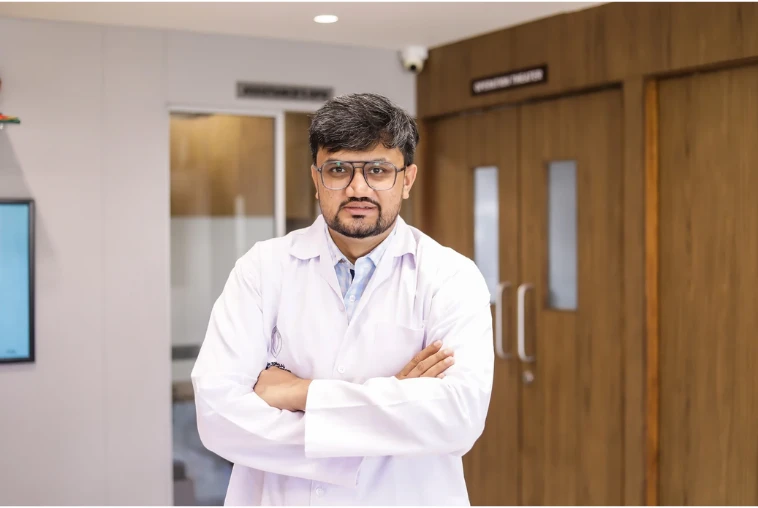
Dr Smit A. Desai
- Fellowship in Oral Oncology (AOMSI, 2017–19)
- Travelling Fellowship in Head & Neck Oncology (FHNO, 2018)
- Member: AOMSI, IAOO, IAOMS, FHNO
- 8,000+ patients treated
- Full profile and training
Why patients choose Heyansh Oral Cancer Hospital
Oral cancer focus
Suspicious oral lesions are assessed regularly — which helps with choosing where the sample should be taken from.
Diagnosis and treatment in one place
If the report shows cancer, you are already with the team that treats it, and the report is explained in plain language.
Second opinions welcome
Including unclear biopsies done elsewhere. Bring the report and, if available, the glass slides.
Get an oral cancer biopsy in Ahmedabad
A patch or ulcer that has not settled in three weeks should be looked at. Send Heyansh Oral Cancer Hospital a photo and your reports, and the team can tell you whether a biopsy is needed and what it would involve.
